Chicken Lo Mein Recipe – Quick, Flavorful, and Weeknight-Friendly

Lo mein is the kind of takeout classic that always hits the spot, and making it at home is easier than you might think. This chicken lo mein recipe is fast, flexible, and big on flavor without needing hard-to-find ingredients. The noodles are tender, the veggies stay crisp, and the sauce ties everything together with a savory, slightly sweet finish.
If you’re craving a satisfying dinner that comes together in under 30 minutes, this one’s a keeper.
What Makes This Recipe So Good
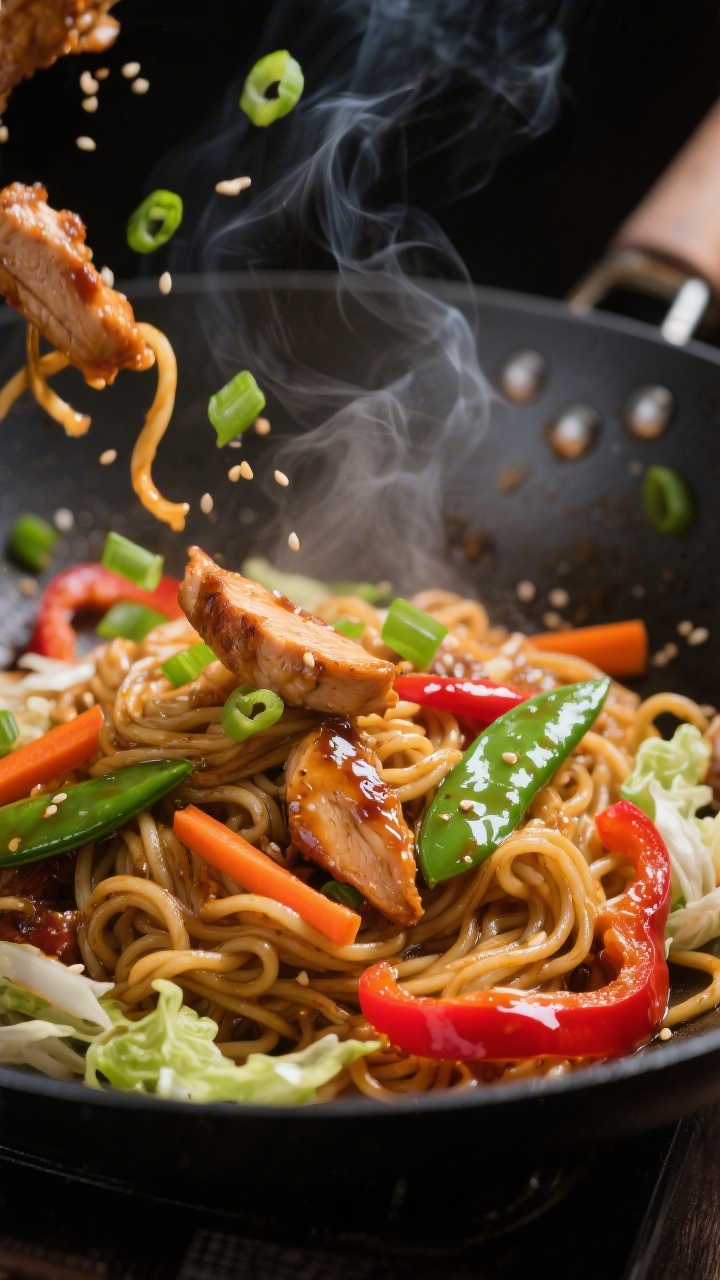
- Fast and simple: With a little prep, you can get this on the table in about 25 minutes.
- Balanced flavors: The sauce blends soy, oyster sauce, sesame oil, and a touch of sweetness to create a deep, restaurant-style taste.
- Great texture: Tender chicken, bouncy noodles, and crisp-tender vegetables keep every bite interesting.
- Flexible ingredients: Swap in whatever veggies you have, and use spaghetti if you can’t find lo mein noodles.
- Meal prep friendly: Leftovers reheat well for lunch the next day.
Shopping List
- Noodles: 12 ounces lo mein or egg noodles (or spaghetti as a backup)
- Chicken: 1 pound boneless, skinless chicken breast or thighs, thinly sliced
- Aromatics: 3 cloves garlic (minced), 1 tablespoon fresh ginger (minced)
- Vegetables: 1 cup carrots (matchsticks), 1 red bell pepper (thinly sliced), 2 cups shredded cabbage or coleslaw mix, 1 cup snow peas or snap peas, 4 green onions (sliced)
- Cooking oil: Neutral oil like canola, avocado, or peanut oil
- Sauce ingredients:
- 3 tablespoons low-sodium soy sauce
- 2 tablespoons oyster sauce
- 1 tablespoon dark soy sauce (optional for color and depth)
- 1 tablespoon hoisin sauce (optional for sweetness)
- 1 teaspoon toasted sesame oil
- 1 teaspoon sugar or honey
- 1/3 cup low-sodium chicken broth or water
- 1 teaspoon cornstarch (for a light thickening)
- 1/4 teaspoon white pepper or black pepper
- Optional add-ins: Bean sprouts, mushrooms, baby bok choy, chili flakes, chili oil
Instructions
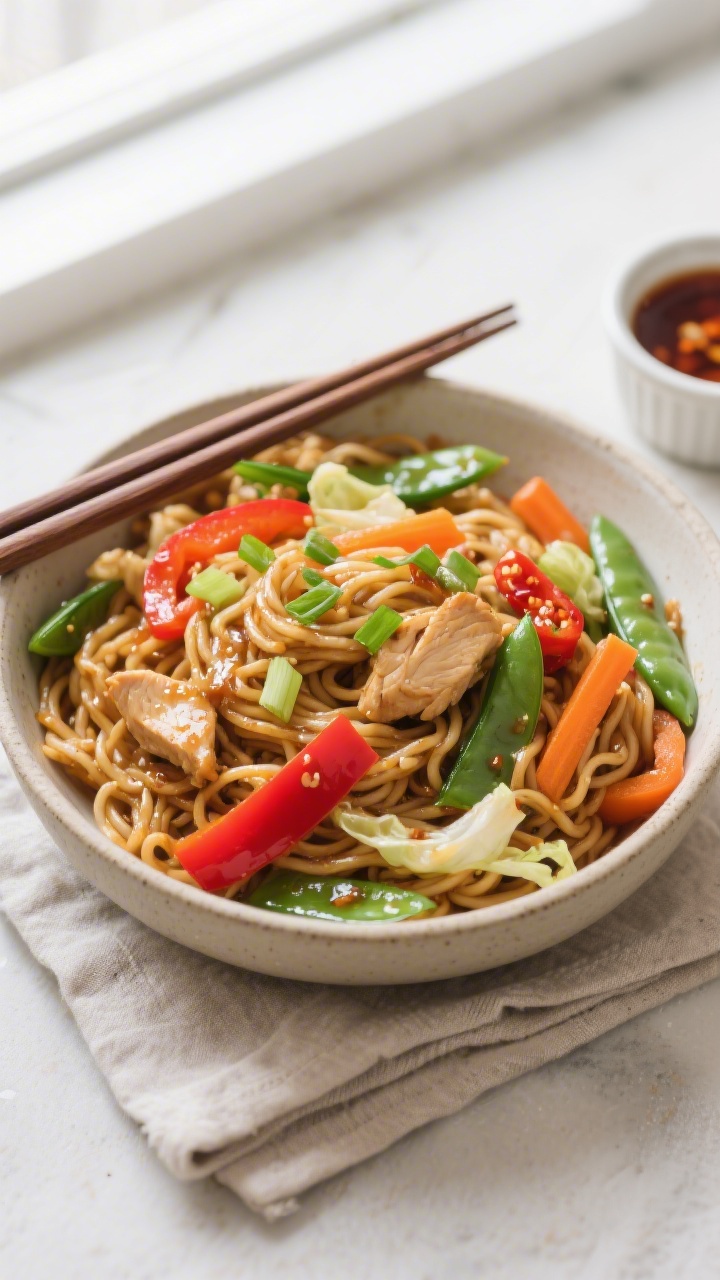
- Cook the noodles: Bring a large pot of salted water to a boil. Cook noodles according to package directions until just shy of tender. Drain, rinse briefly under cool water to stop cooking, and toss with a teaspoon of oil to prevent sticking.
- Make the sauce: In a small bowl, whisk soy sauce, oyster sauce, dark soy (if using), hoisin (if using), sesame oil, sugar or honey, chicken broth, cornstarch, and pepper.
Set aside.
- Prep the chicken: Pat the chicken dry and slice thinly against the grain. Season with a pinch of salt and pepper. For extra tenderness, you can “velvet” it by tossing with 1 teaspoon cornstarch and 1 teaspoon soy sauce.
- Heat the pan: Place a large skillet or wok over medium-high heat.
Add 1 tablespoon oil and swirl to coat until shimmering.
- Stir-fry the chicken: Add chicken in a single layer. Cook without moving for 1–2 minutes to get light browning, then stir-fry until just cooked through, 3–4 minutes total. Transfer to a plate.
- Cook aromatics: Add another teaspoon of oil if needed.
Add garlic and ginger. Stir for 20–30 seconds until fragrant, being careful not to burn.
- Stir-fry the vegetables: Add carrots, bell pepper, and peas. Cook 2–3 minutes until crisp-tender.
Add cabbage and most of the green onions (save some for garnish). Stir-fry 1–2 minutes more.
- Combine noodles and chicken: Return chicken to the pan with the vegetables. Add the cooked noodles, breaking up any clumps with tongs.
- Add the sauce: Pour the sauce around the edges of the pan.
Toss everything together over medium-high heat until the noodles are coated and glossy and the sauce slightly thickens, about 1–2 minutes.
- Finish and serve: Taste and adjust seasoning with a splash more soy sauce, a pinch of sugar, or a few drops of sesame oil. Garnish with remaining green onions. Serve hot.
How to Store
- Refrigerate: Cool completely, then store in an airtight container for up to 4 days.
- Reheat: Warm in a skillet over medium heat with a splash of water or broth, tossing until hot.
Microwave in short bursts, stirring between intervals.
- Freeze: Not ideal due to noodle texture, but possible. Freeze up to 2 months and reheat gently to avoid mushiness.
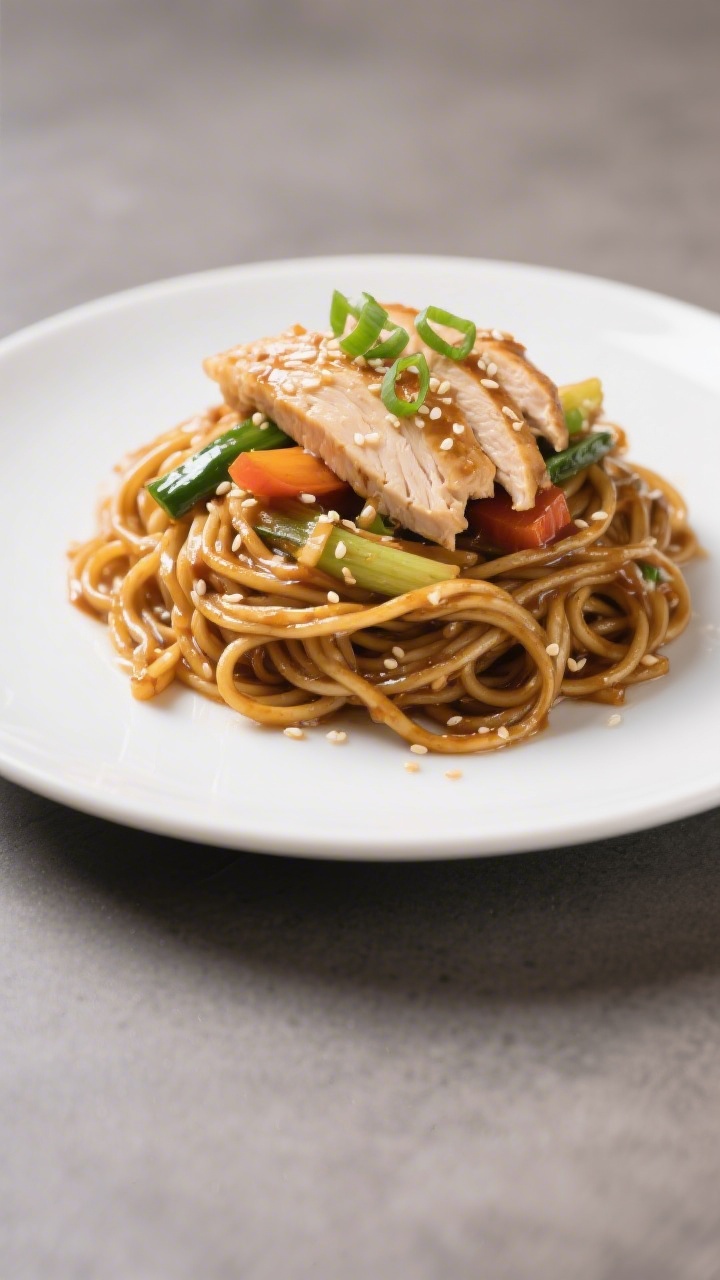
Health Benefits
- Lean protein: Chicken breast provides high-quality protein with relatively low fat, supporting muscle maintenance and satiety.
- Veggie variety: Bell peppers, carrots, and cabbage add fiber, vitamin C, vitamin A, and antioxidants. They also boost fullness without excess calories.
- Controlled sodium: Using low-sodium soy sauce and broth helps manage salt levels compared to typical takeout.
- Better fats: Cooking with a small amount of neutral oil and finishing with a touch of sesame oil keeps the dish flavorful without being heavy.
Common Mistakes to Avoid
- Overcooking noodles: If they’re too soft before stir-frying, they’ll turn mushy.
Cook them just until al dente and rinse briefly.
- Crowding the pan: Overloading the wok steams the ingredients. Cook in batches if needed to keep everything crisp and seared.
- Skipping the sauce prep: Stir-fries move fast. Have the sauce mixed and ready so you don’t overcook the veggies while measuring.
- Not drying the chicken: Wet chicken won’t brown well.
Pat it dry and slice thinly for quick, even cooking.
- Using too little heat: Medium-high to high heat gives that signature stir-fry texture and keeps veggies snappy.
Recipe Variations
- Spicy lo mein: Add chili crisp, sriracha, or red pepper flakes to the sauce. A drizzle of chili oil at the end wakes up the flavors.
- Vegetarian: Swap chicken for tofu or more mushrooms. Use vegetarian oyster sauce or extra soy and a touch of hoisin.
- Gluten-free: Use gluten-free tamari and oyster sauce alternatives, and choose gluten-free noodles like rice noodles (texture will differ slightly).
- Extra greens: Toss in spinach, baby bok choy, or broccoli florets.
Blanch broccoli first for even cooking.
- Peanut twist: Whisk 1 tablespoon peanut butter into the sauce for a nutty, lightly creamy lo mein.
- Citrus lift: Finish with a squeeze of lime and a sprinkle of zest for brightness.
FAQ
What’s the difference between lo mein and chow mein?
Lo mein uses boiled, soft noodles that are tossed with sauce, while chow mein typically uses noodles that are stir-fried until slightly crisp. The textures and cooking methods are different, though the flavor profiles can overlap.
Can I use spaghetti instead of lo mein noodles?
Yes. Spaghetti is a great substitute in a pinch.
Cook it until al dente, rinse briefly, and toss with a little oil to prevent sticking before stir-frying.
Do I need a wok?
No. A large, heavy skillet works well. The key is high heat, enough surface area, and not overcrowding the pan.
How do I keep the noodles from clumping?
Rinse briefly after cooking and toss with a teaspoon of oil.
When adding to the pan, separate with tongs and make sure there’s enough sauce to coat.
Can I use pre-shredded coleslaw mix?
Absolutely. It’s a quick shortcut and works perfectly in lo mein. Add it toward the end so it stays crisp-tender.
What protein substitutions work best?
Shrimp, thinly sliced beef, pork, or tofu all work well.
Adjust cook times: shrimp cooks fast, while beef and pork benefit from thin slicing and a brief cornstarch toss.
Why is my lo mein bland?
You may need a touch more soy sauce, a pinch of sugar, or a drizzle of sesame oil. Also make sure the noodles are fully coated—don’t skimp on tossing over heat for that glossy finish.
Can I make this ahead?
You can prep the sauce, slice the chicken, and cut the vegetables ahead of time. Cook fresh when ready to eat for the best texture, or store assembled leftovers for up to 4 days.
In Conclusion
Chicken lo mein is a reliable, crowd-pleasing dish that turns simple ingredients into a flavorful, comforting meal.
With a smart sauce, high heat, and a good toss, you’ll get that takeout-style taste at home any night of the week. Keep the base the same, swap in what you have, and make it your own. Once you try it, it’ll become a weeknight regular.

Chicken Lo Mein Recipe - Quick, Flavorful, and Weeknight-Friendly
Ingredients
Method
- Cook the noodles: Bring a large pot of salted water to a boil. Cook noodles according to package directions until just shy of tender. Drain, rinse briefly under cool water to stop cooking, and toss with a teaspoon of oil to prevent sticking.
- Make the sauce: In a small bowl, whisk soy sauce, oyster sauce, dark soy (if using), hoisin (if using), sesame oil, sugar or honey, chicken broth, cornstarch, and pepper.Set aside.
- Prep the chicken: Pat the chicken dry and slice thinly against the grain. Season with a pinch of salt and pepper. For extra tenderness, you can “velvet” it by tossing with 1 teaspoon cornstarch and 1 teaspoon soy sauce.
- Heat the pan: Place a large skillet or wok over medium-high heat.Add 1 tablespoon oil and swirl to coat until shimmering.
- Stir-fry the chicken: Add chicken in a single layer. Cook without moving for 1–2 minutes to get light browning, then stir-fry until just cooked through, 3–4 minutes total. Transfer to a plate.
- Cook aromatics: Add another teaspoon of oil if needed.Add garlic and ginger. Stir for 20–30 seconds until fragrant, being careful not to burn.
- Stir-fry the vegetables: Add carrots, bell pepper, and peas. Cook 2–3 minutes until crisp-tender.Add cabbage and most of the green onions (save some for garnish). Stir-fry 1–2 minutes more.
- Combine noodles and chicken: Return chicken to the pan with the vegetables. Add the cooked noodles, breaking up any clumps with tongs.
- Add the sauce: Pour the sauce around the edges of the pan.Toss everything together over medium-high heat until the noodles are coated and glossy and the sauce slightly thickens, about 1–2 minutes.
- Finish and serve: Taste and adjust seasoning with a splash more soy sauce, a pinch of sugar, or a few drops of sesame oil. Garnish with remaining green onions. Serve hot.
Printable Recipe Card
Want just the essential recipe details without scrolling through the article? Get our printable recipe card with just the ingredients and instructions.

A home decor lover and recipe creator, she shares practical room ideas, timeless interior inspiration, and simple recipes that make everyday living cozy, stylish, and enjoyable.