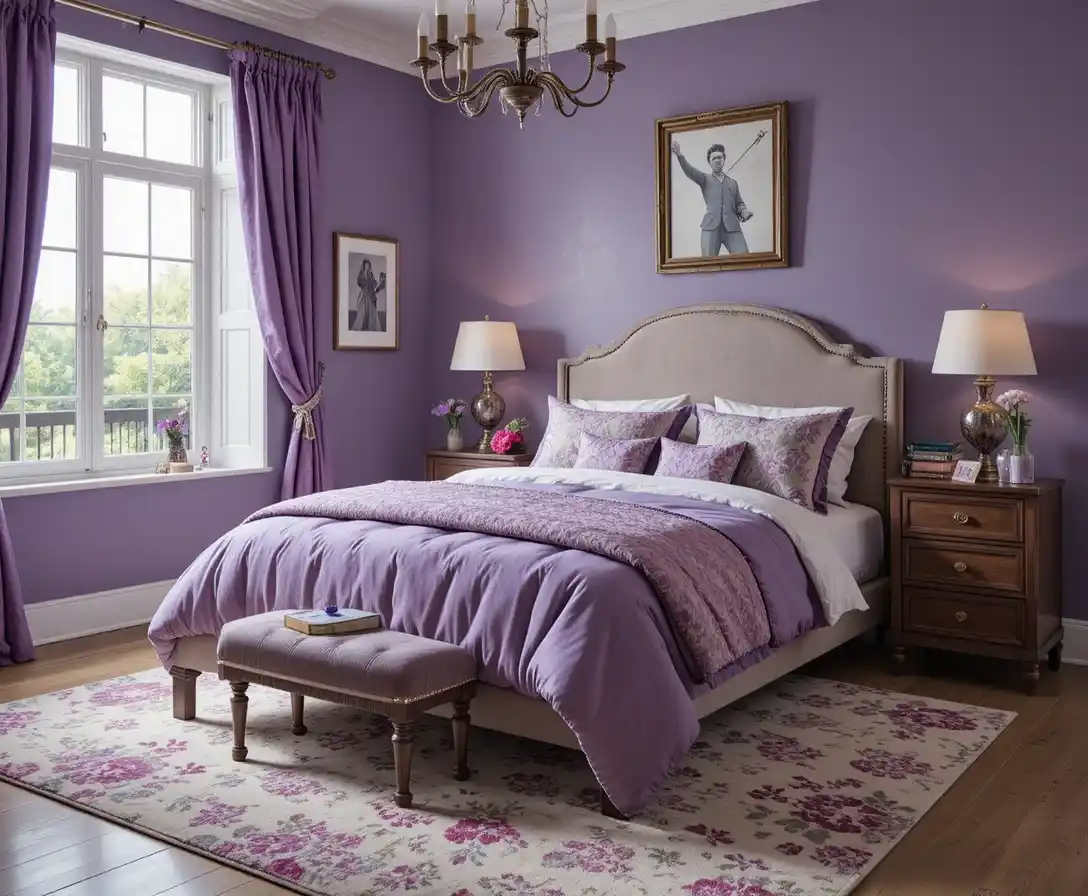
12 Purple Bedroom Ideas That Feel Cozy, Calm, and Stylish

If you love purple but hesitate to use it in your bedroom, you’re not alone. Many homeowners worry it will feel too dark, too childish, or too trendy once the excitement wears off. The truth is, purple can feel calm, cozy, and surprisingly timeless—if it’s used with the right balance. These 12 purple bedroom ideas focus on real-life comfort, lighting, maintenance, and long-term satisfaction, not Pinterest fantasy rooms you’ll regret later.
Why Purple Bedrooms Feel Tricky (And How to Get Them Right)
Purple sits between warm and cool tones, which is why it can either feel luxurious or overwhelming depending on how it’s handled. The biggest mistake homeowners make is committing to too much purple too fast—dark walls, bold bedding, and heavy décor all at once.
The goal isn’t to make purple the star of every surface. It’s to let it support the mood of your bedroom while neutrals and textures do the heavy lifting.
1. Soft Lavender Walls for Low-Light Bedrooms
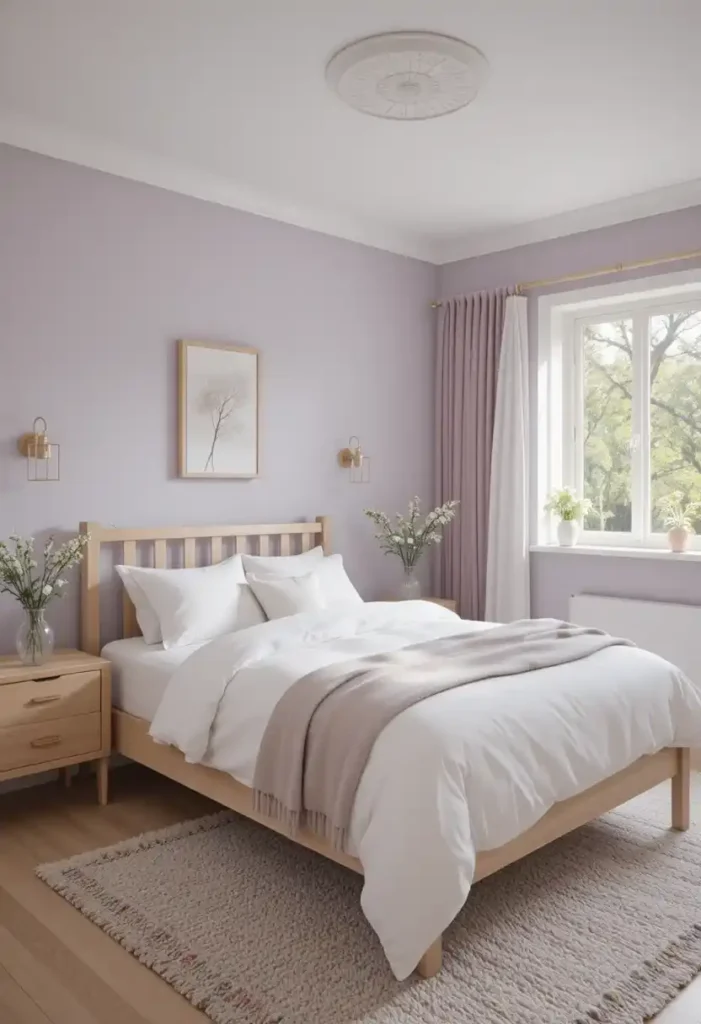
Bedrooms with limited sunlight can easily feel dull or closed in, especially with darker colors. Soft lavender and dusty lilac work better because they bounce light instead of absorbing it. These shades create a gentle glow, even on cloudy days, making the room feel calmer and more open.
To avoid a gray or washed-out look, always pair lavender walls with warm white trim, light oak furniture, or cream bedding. Cool whites or stark grays can make lavender feel lifeless.
Real-life lesson: Many homeowners regret choosing satin finishes because they highlight wall flaws under lamps. Matte or eggshell finishes look smoother and more forgiving over time.
2. Plum Accent Wall Behind the Bed
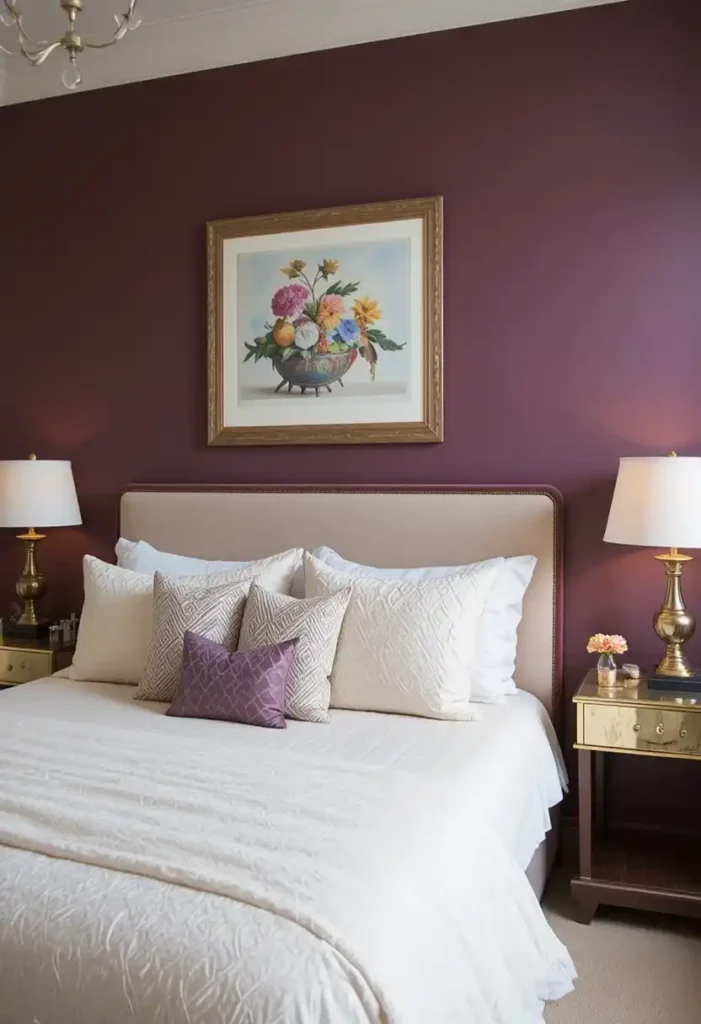
A plum accent wall adds depth and elegance without overwhelming the entire bedroom. Placing it behind the headboard naturally draws the eye to the bed, making the room feel intentional instead of randomly colorful.
This works best when the rest of the room stays light and neutral. White or cream bedding softens the contrast, while brass or wood nightstands add warmth. Neutral curtains help prevent the room from feeling too dark at night.
Tip from experience: Accent walls feel more “finished” when the headboard is wide enough to visually anchor the color.
3. Purple Through Textiles (The Safest Option)
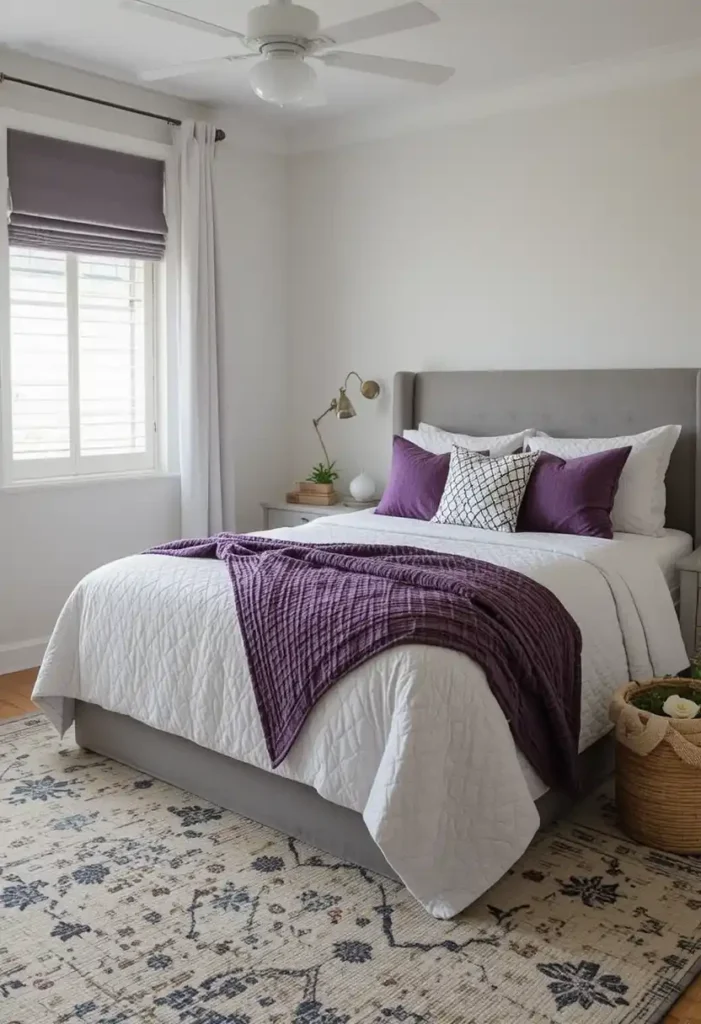
If you’re unsure about committing to purple long-term, textiles are the smartest entry point. Throw pillows, quilts, and area rugs allow you to experiment without repainting or replacing furniture.
This option is especially popular with renters or homeowners who like to refresh their space seasonally. Textiles also soften purple, making it feel cozy rather than bold.
Common regret: Buying too many patterned purple pieces at once. Stick to solids or subtle textures for better longevity.
Also Read This Blog: 12 Charming Pink and White Bedroom Ideas for Dreamy Decor
4. Mauve and Greige for a Grown-Up Look
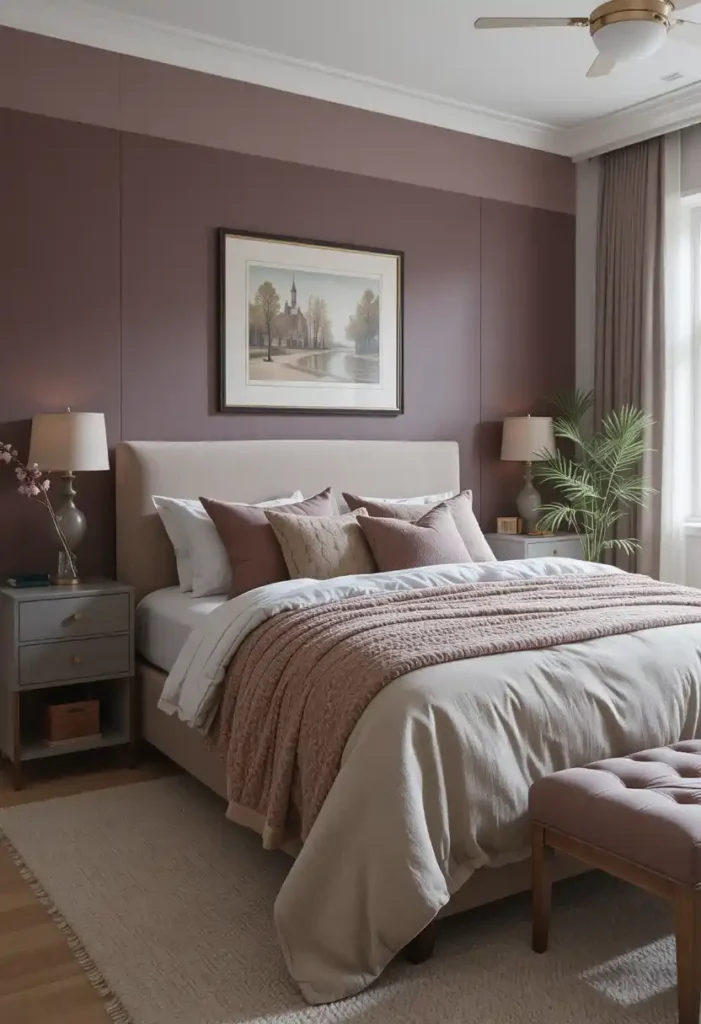
Mauve paired with greige creates a refined, calming palette that feels mature and timeless. Unlike brighter purples, mauve doesn’t dominate the space, making it ideal for primary bedrooms.
Greige walls balance mauve’s warmth, preventing the room from feeling overly feminine or trendy. This combination works beautifully with upholstered beds and layered neutral bedding.
Lesson learned: Rooms like this age gracefully, reducing the urge to repaint or redecorate frequently.
5. Purple Headboards as a Statement Piece
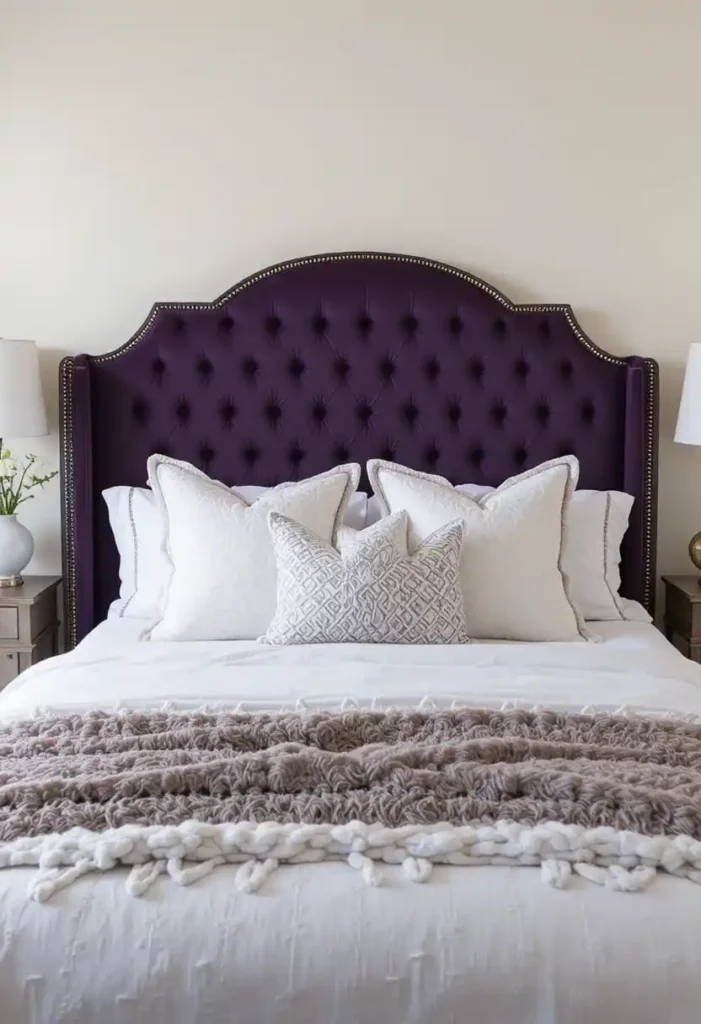
A purple headboard offers visual impact without overwhelming the entire room. Velvet or upholstered styles add texture and a touch of luxury, while still feeling cozy and inviting.
Headboards are also easier to replace than repainting walls, making them a low-risk choice. Clean lines and simple silhouettes help avoid a dated look over time.
Maintenance note: Dark velvet hides wear better than lighter fabrics and requires less frequent cleaning.
6. Layered Neutrals to Prevent Color Fatigue
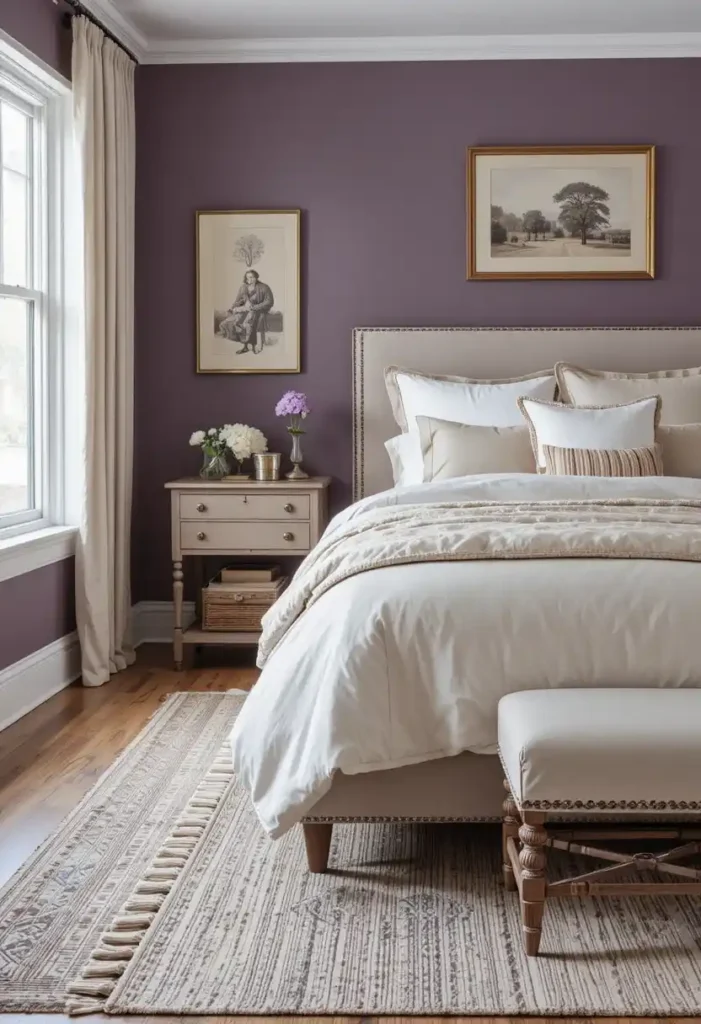
Purple can feel heavy if it dominates too many surfaces. Layering neutrals like white, beige, and soft gray creates visual breathing room and makes the bedroom more sleep-friendly.
Use neutrals in bedding, rugs, and lampshades to balance purple accents. This approach also helps when lighting changes throughout the day.
Real-home insight: Color fatigue is one of the biggest reasons people redesign bedrooms sooner than planned.
7. Deep Eggplant for Large Bedrooms Only
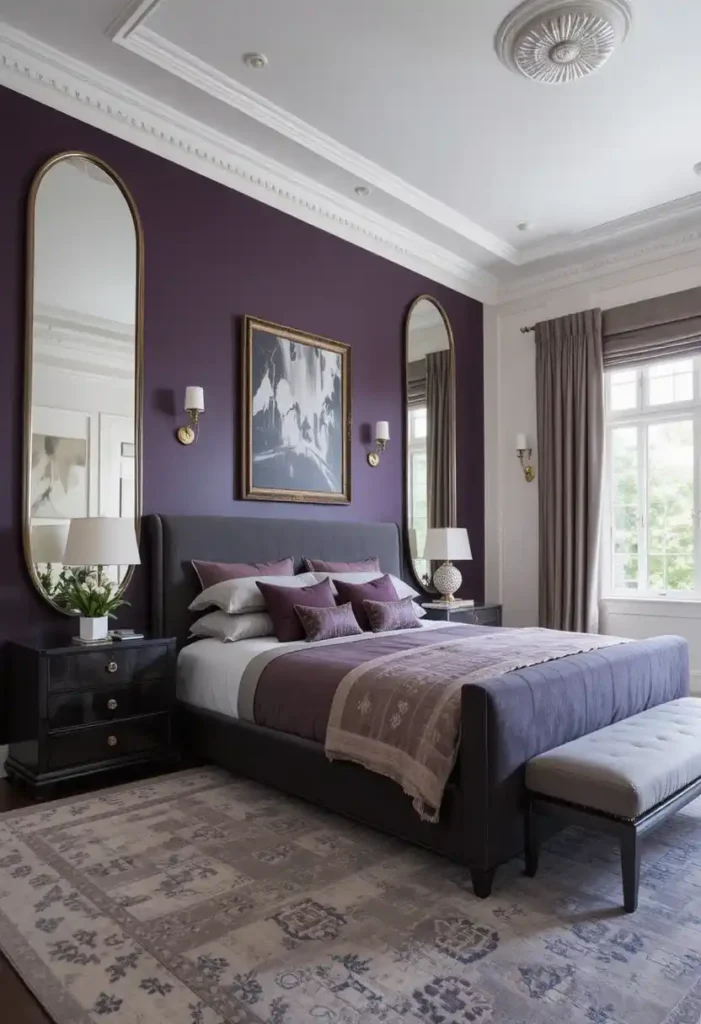
Eggplant and other deep purple tones work best in spacious bedrooms with ample lighting. In smaller rooms, these shades can make the walls feel closer and the ceiling lower.
If you love eggplant, limit it to one wall and keep ceilings white. Mirrors help reflect light and prevent the room from feeling enclosed.
Mistake to avoid: Using dark purple on all four walls without testing nighttime lighting.
Also Read This Blog: 15 Blue Bedroom Ideas That Feel Calm, Stylish, and Livable
8. Purple with Natural Wood for Warmth
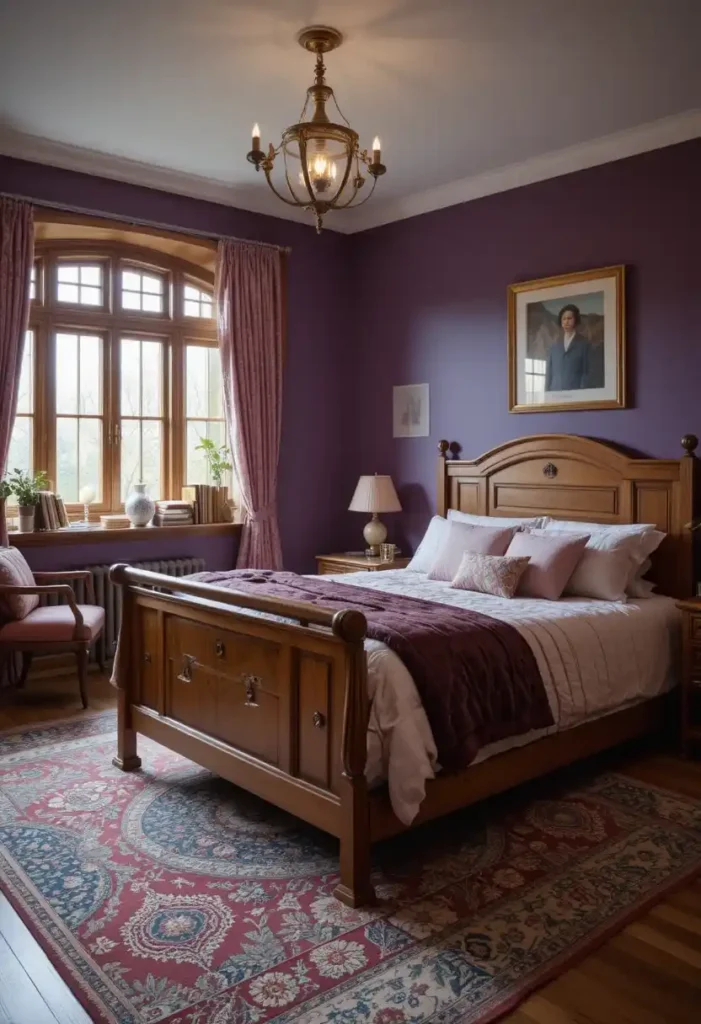
Natural wood tones like oak, walnut, or rattan soften purple’s intensity and make the room feel grounded. This pairing adds warmth and prevents purple from feeling theatrical or cold.
Wood furniture also balances modern and traditional styles, making the bedroom feel timeless rather than trend-driven.
Long-term benefit: This combination holds up well even as décor trends change.
9. Minimal Decor, Maximum Impact
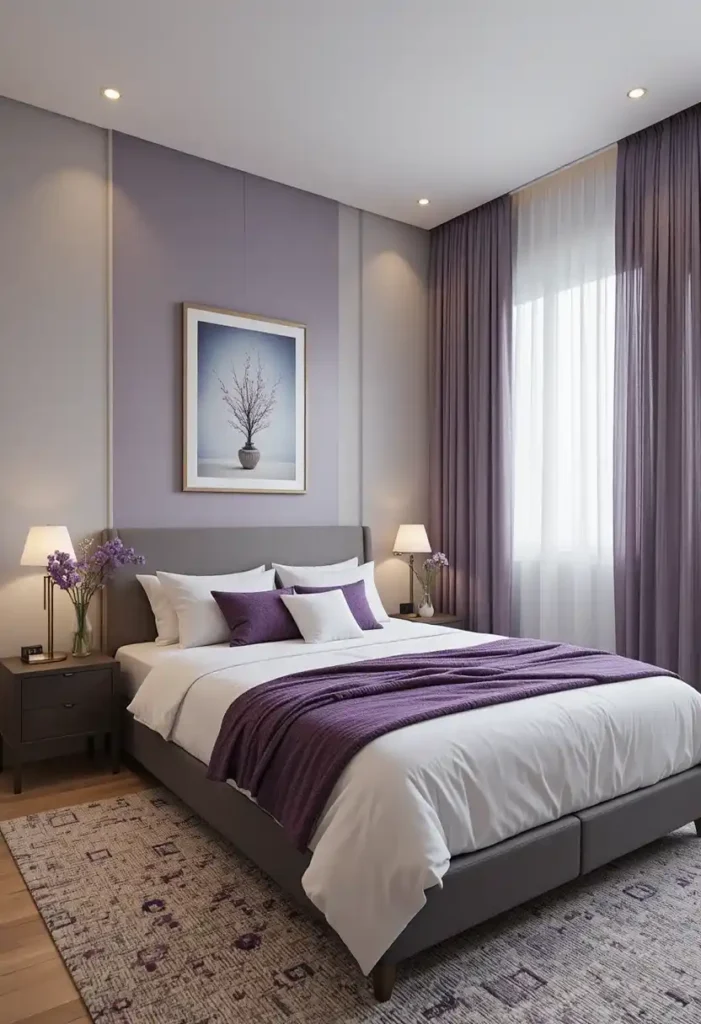
When purple is involved, restraint matters. Too many accessories or competing shades create visual clutter and reduce the calming effect a bedroom should have.
Choose one or two purple elements and let them stand out. Keep shelves simple and avoid mixing multiple purple tones unless they’re closely related.
Common regret: Overdecorating to “balance” purple, which actually creates chaos.
10. Purple and Green for a Balanced Palette
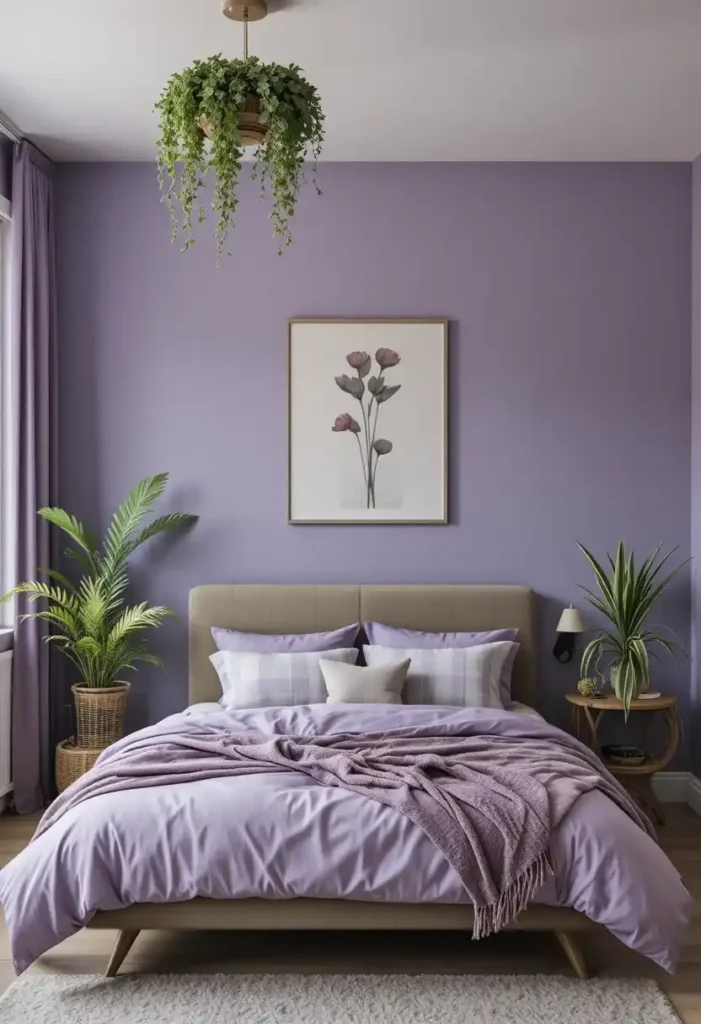
Muted purple paired with sage or olive green creates a soothing, nature-inspired look. Green adds freshness, while purple adds depth, resulting in a balanced and calming bedroom.
Live plants enhance this palette and prevent purple from feeling heavy or artificial.
Practical tip: Stick to muted greens instead of bright emeralds for better sleep ambiance.
11. Purple Artwork Instead of Purple Walls
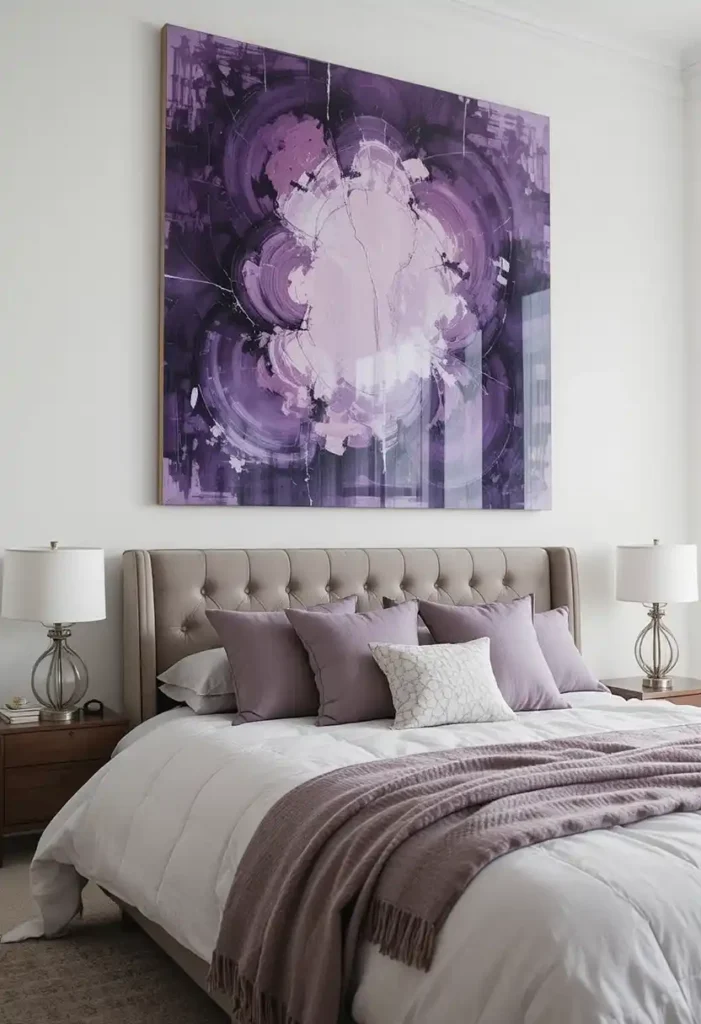
Artwork is the easiest way to introduce purple without long-term commitment. Large abstract pieces or soft watercolor designs can set the tone without altering walls or furniture.
This option works well for homeowners who enjoy seasonal updates or frequently rearrange décor.
Bonus: Artwork is easy to swap if your color preferences change.
12. Bedroom Lighting Matters More Than Color
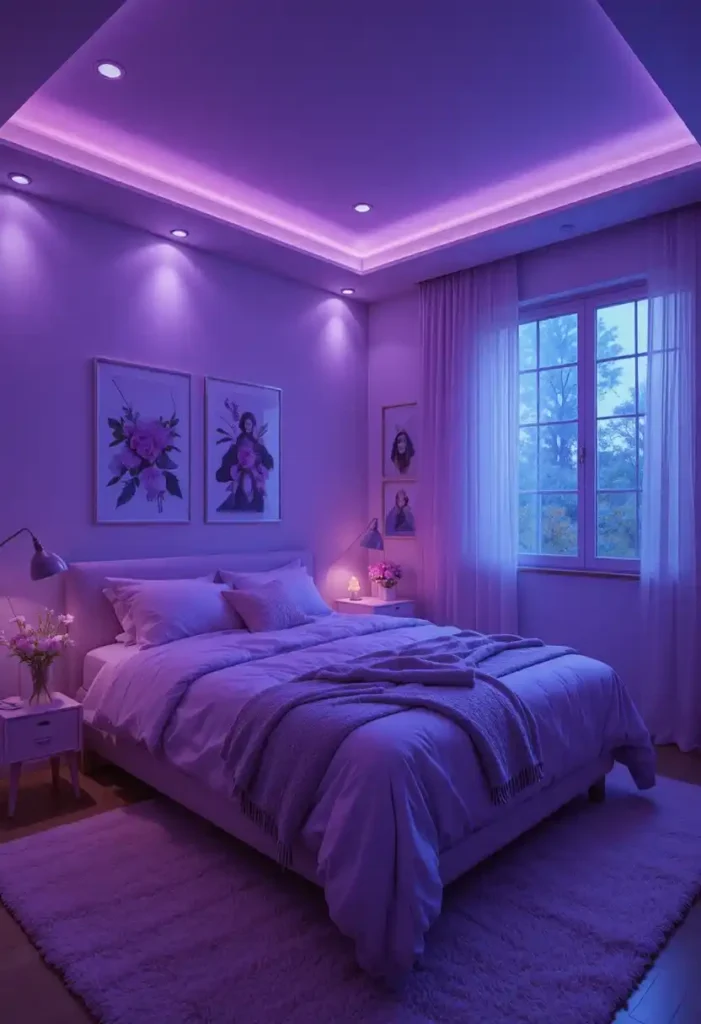
Purple reacts strongly to lighting, often looking warmer or cooler depending on bulb temperature. Always test lighting before finalizing your palette.
Warm white bulbs (2700K–3000K) enhance purple’s richness and make the room feel cozy. Cool white lighting often makes purple appear harsh or gray.
Lighting choices can make or break all 12 purple bedroom ideas, no matter how well they’re styled.
Also Read This Blog: 15 Chic Black and Pink Bedroom Ideas for a Modern Makeover
Common Purple Bedroom Mistakes to Avoid
Many homeowners unintentionally create uncomfortable bedrooms by:
- Using only cool tones, which feel cold and uninviting
- Ignoring undertones (purple can lean blue, red, or gray)
- Choosing trendy shades without considering longevity
- Overdecorating instead of simplifying
Bedrooms should feel restful, not visually noisy.
How to Know If Purple Is Right for Your Bedroom
Before committing, ask yourself:
- Do I want calm or drama in this space?
- How much natural light does my bedroom get?
- Am I comfortable with this color for the next 5–7 years?
When chosen thoughtfully, 12 purple bedroom ideas like these offer flexibility, personality, and long-term comfort—not just Pinterest appeal.
Final Thoughts: Making Purple Feel Like Home
Purple doesn’t have to feel risky or overwhelming. When balanced with neutrals, good lighting, and practical choices, it becomes one of the most versatile bedroom colors you can use. The key is restraint, intention, and understanding how you actually live in the space—not just how it looks in photos.
If you approach 12 purple bedroom ideas with comfort and longevity in mind, you’ll end up with a room that feels personal, calming, and easy to love for years.

A home decor lover and recipe creator, she shares practical room ideas, timeless interior inspiration, and simple recipes that make everyday living cozy, stylish, and enjoyable.